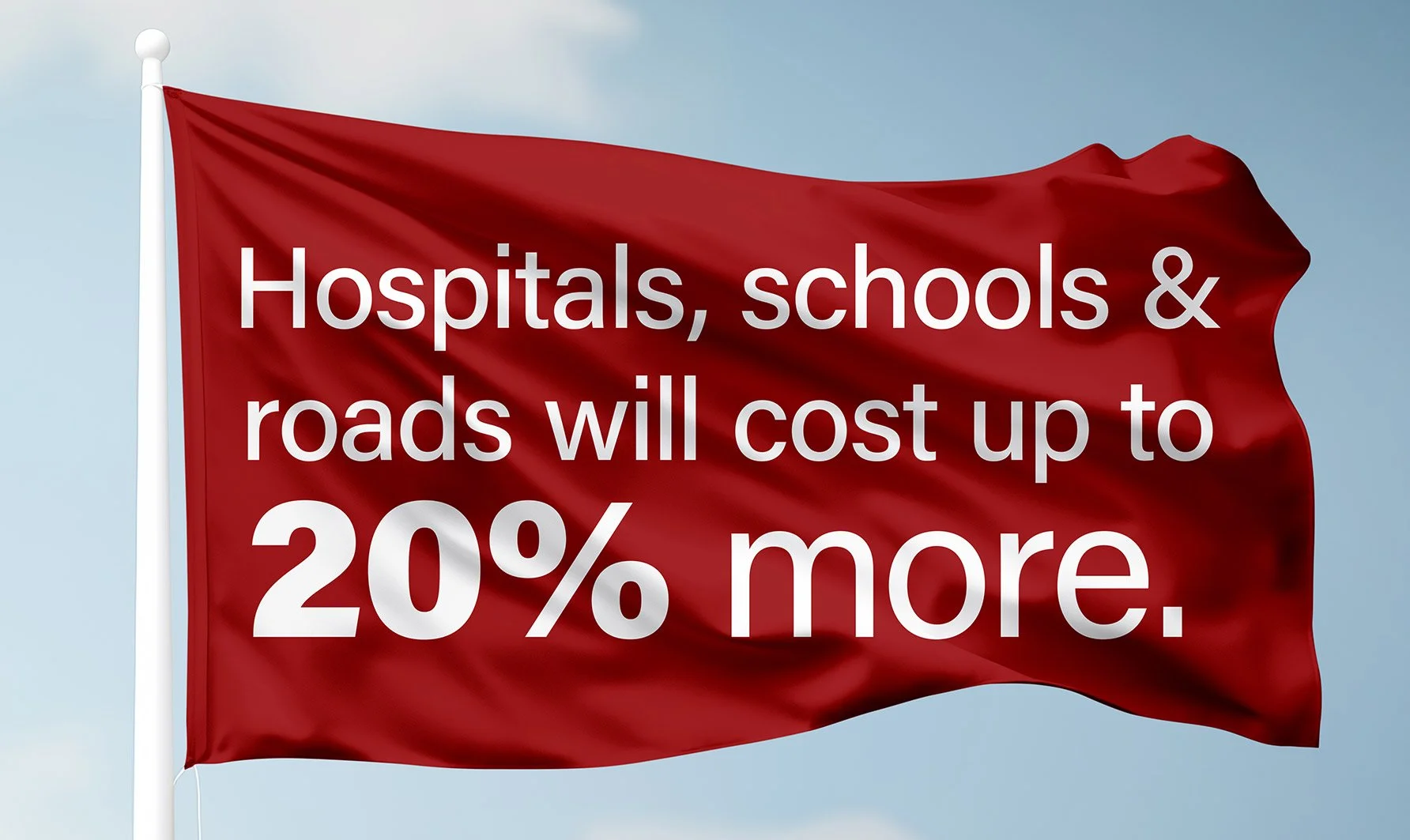
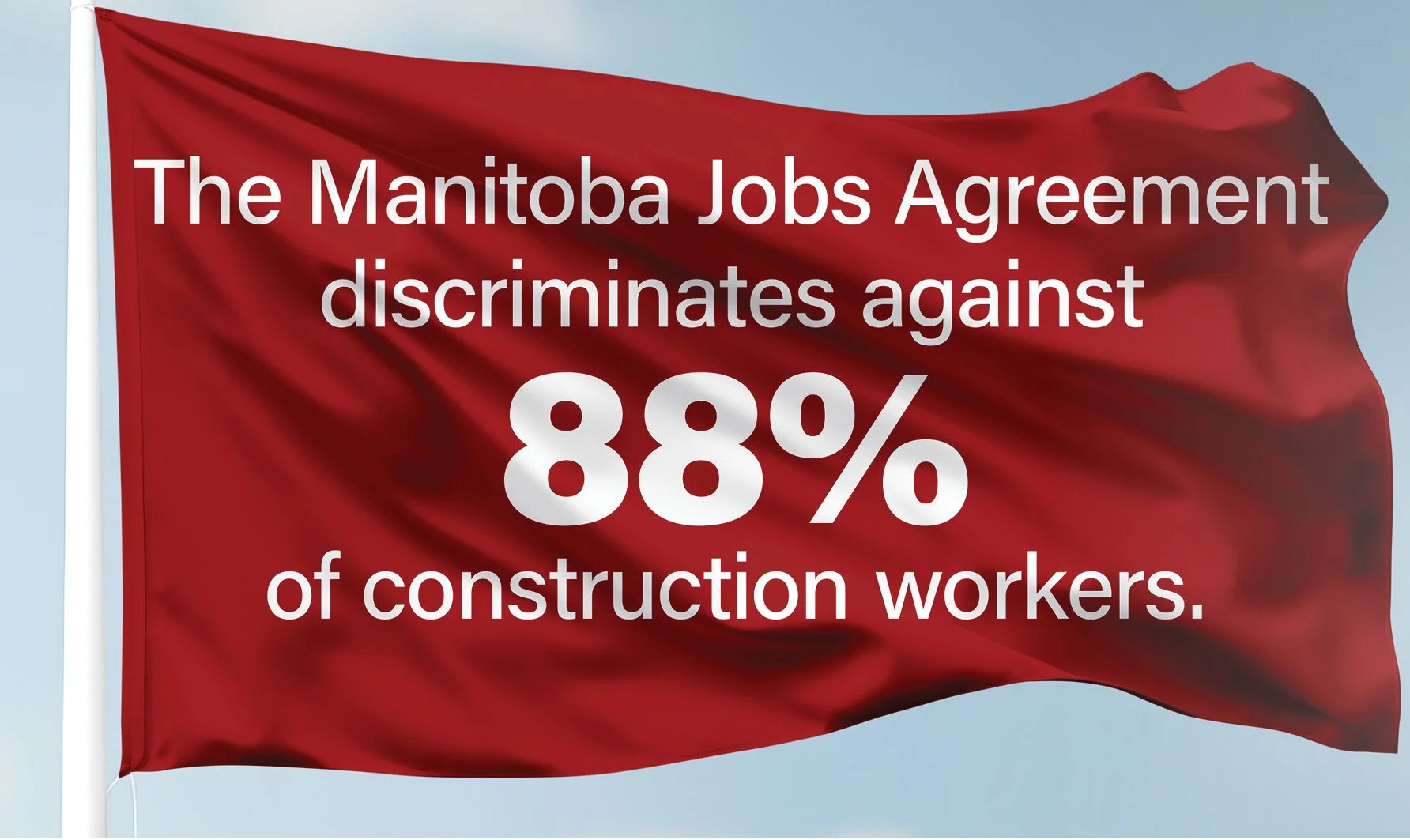
Building Better Policy for all Manitobans
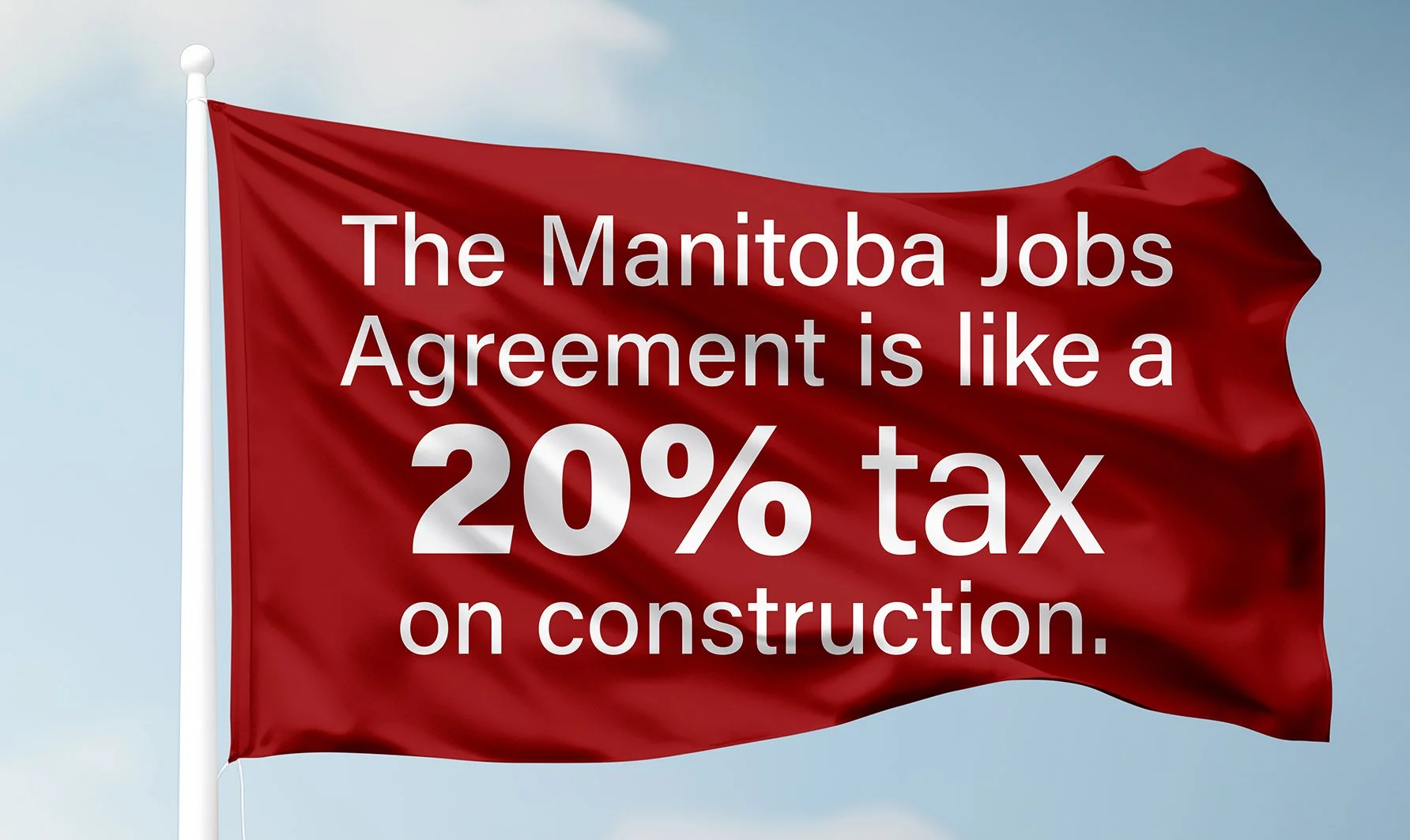
As currently constructed, the Manitoba Jobs Agreement is a solution in search of a problem. The provincial government claims the MJA will improve worker wages, safety and equity while securing labour peace on large projects. These are worthy goals - but a project labour agreement does nothing to reach them.
Labour peace already exists
There are no strikes in Manitoba’s open shop construction sector. The Labour Management Relations Committee is a long-standing, collaborative model that is the envy of other jurisdictions.
Wages are already regulated and competitive
Union wages are set through collective bargaining, while open shop minimum wages are governed by the Construction Industry Wages Act (CIWA). Most of the industry already pays 5-30% above CIWA minimums. Ironically, increased CIWA enforcement has been resisted by government, and some unions even opposed higher CIWA minimums when they approached union CBA wage levels.
Workplace Safety is Strong and Industry-Focused
Workplace safety is enforced by the Workplace Safety and Health (WSH) branch. This system is funded entirely by employer-paid WCB premiums. COR certification has been a standard condition of contracts for decades, and industry-based safety programming has driven injury rates downward.
Jobs for Manitobans - A Better Way
Manitoba’s construction industry prides itself on being a source of good, reliable, well-paying jobs for Manitobans. The last time we checked, a Manitoban is a Manitoban based on their place of residence - not based on whether or not they carry a union card. If local employment is the goal, require successful bidders to certify that all project workers are Manitoba residents.
MJA will disproportionately hurt Rural and Indigenous Communities
The Manitoba Jobs Agreement will burden smaller firms lacking administrative capacity. It will force project bundling that excludes small contractors, reduced bidding competition and increases red tape. This disproportionately hurts Indigenous companies.
All 12 of the Construction Association of Rural Manitoba’s Indigenous owned firms are open shop. Most operate with 10 or fewer employees. Removing their ability to compete for these jobs undermines community economic development and will have the opposite effect of the government’s state intent.
How we can Build Better Policy
We have identified eight key amendments to the MJA for Fairness, Competition and Privacy.
1. No Union Oversight of Non-Union Staff
Requirement: The MJA must explicitly prohibit unions from supervising, directing, disciplining, or managing non-union employees.
Outcome: Non-union employers retain full control over their workforce and site operations.
2. No Union Dues or Payments from Non-Union Workers
Requirement: The MJA must forbid any obligation for non-union workers or contractors to pay union dues, fees, or “representation” charges to work on an MJA project.
Outcome: Workers cannot be compelled to financially support organizations they did not choose.
3. Transparent Wage Compliance Framework
Requirement: Replace affiliation-based enforcement with:
Publicly established model wage rates
Contractor attestation of compliance at all tiers
Random spot audits with pre-agreed cooperation
Outcome: Protects wage standards without restricting participation or creating closed labour pipelines.
4. Raise MJA Project Threshold to $750M
Requirement: Increase the threshold from $50M to $750M to limit the MJA to true mega-projects.
Outcome: Protects competition, regional participation, and Indigenous contractor access, avoiding unnecessary application to smaller schools or regional projects.
5. Hiring Based on Qualification + Manitoba Residency
Requirement: Hiring must be based on competency and Manitoba residency—not union membership or affiliation.
Outcome: All qualified Manitobans can participate equally.
5A. Prohibit Preferential Hiring and Hiring Hall Exclusivity
Requirement: Ban union-first dispatch, exclusive hiring hall requirements, and restrictions on direct hiring.
Outcome: Contractors staff projects based on competence and availability, not union affiliation.
6. Worker Privacy Protection
Requirement: Unions must have no access to personally identifiable worker information (e.g., SIN, home address, DOB, payroll, benefits, medical). Workforce reporting must be minimized, aggregated where possible, and managed only by the Province or a neutral third party under strict privacy rules.
Outcome: Protects workers and reduces risk of coercion or liability.
7. Prevent Project Bundling to Trigger MJA
Requirement: Independent projects should not be artificially packaged to meet the MJA threshold. Each project must be assessed on standalone value and scope.
Outcome: Prevents gaming policy and ensures fair market access.
8. Independent Review After One Year
Requirement: Before any expansion or extension, an independent review must assess: competition and bidder participation, costs, timelines, apprenticeship outcomes, workforce inclusion, and regional impacts. Results must be publicly released and tabled in the Legislature.
Outcome: Guarantees evidence-based accountability and transparent oversight.